Pool Builder
Knowing Which Marketing Dollars Actually Built the Pipeline
The Challenge
For a high-end custom pool builder in the Midwest, a single project can bring in $80,000 or more. With that much on the line per job, where the marketing budget goes matters enormously. The company was running paid search, organic, social ads, and direct mail simultaneously — but no one could say with confidence which channel was actually producing qualified leads.
The sales manager spent about four hours every week pulling call logs from CallRail and cross-referencing them against leads in Pipedrive by hand. Even then, the data was incomplete. They could see the last thing a prospect clicked before calling, but not what first introduced them to the brand — the difference between crediting Google Ads for a close that organic search started months earlier. Without both first-touch and last-touch data, ad spend decisions were educated guesses. The owner estimated they were misallocating roughly $2,000 per month as a result.
The Solution
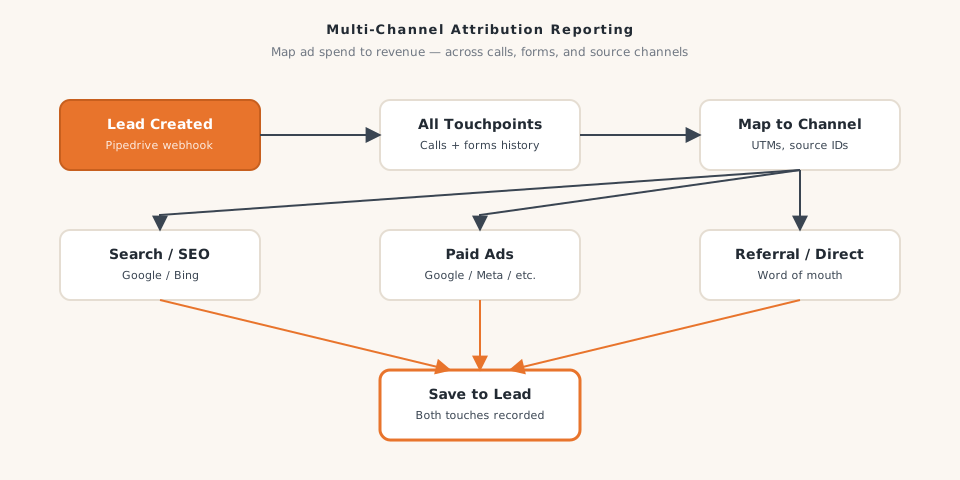
We built a workflow that fires automatically each time a lead is created or updated in Pipedrive. The moment that happens, the system reaches into CallRail and retrieves the full contact history for that prospect — every touchpoint on record. It identifies the very first interaction that brought them to the website and the most recent one before they converted, then maps each to a standardized source label: Google Ads, organic search, Facebook, direct, referral, and so on.
Both the first-touch source and the last-touch source are written directly into custom fields on the Pipedrive lead record. No spreadsheet. No manual lookups. The complete attribution picture lives inside the CRM where the sales team already works, visible at a glance on every lead card.
How It Works
- A lead is created or updated in Pipedrive, which triggers the workflow
- The system retrieves all phone calls and form submissions in CallRail associated with that contact
- It identifies the first recorded interaction (first touch) and the most recent before conversion (last touch)
- A logic layer maps raw channel data to clean, consistent source labels
- Both source IDs are written back to the Pipedrive lead record as structured fields
- The process repeats automatically for every lead, with no manual steps
The Results
- Attribution data now populates on 100% of new leads automatically, compared to roughly 60% coverage with manual entry
- The sales manager recovered approximately 4 hours per week previously spent cross-referencing call logs and CRM records
- The owner identified one paid search campaign receiving 40% of the budget but generating under 15% of first-touch leads — a reallocation opportunity worth an estimated $1,800 per month
- First-touch and last-touch data are now both visible on every deal, making it clear which channels build awareness versus which ones close — a distinction that was previously invisible
- Marketing budget decisions shifted from gut feel to data backed by every lead the pipeline generates
With attribution running automatically, the team finally had the evidence to double down on what was working and cut what wasn't — without anyone doing manual data entry to get there.
Why It Matters for Your Business
If your sales team knows which channel a lead came from but can’t trace what first caught their attention weeks earlier, you’re only seeing half the picture. Attribution that lives in your CRM — without manual work — lets you spend confidently and stop funding channels that only look good on paper. Impression Insights builds automations like this for home services and construction businesses throughout the Midwest. Let’s talk.
Ready to build yours?
Impression Insights builds practical automations for small to mid-sized businesses. Let's scope your first workflow.
Book a Discovery Call