Pool Builder
Liner Replacement Requests Routed to Sales Before the Customer Calls Someone Else
The Challenge
For a pool service and renovation company specializing in liner replacement, the customer profile is specific and the urgency is real. These are existing pool owners — not people dreaming about a future project. Their liner is faded, torn, or leaking. They want a quote quickly, and if they don’t hear back within a day or two, they’ll call the next company on the list.
The liner form collected details that matter for quoting: pool shape, approximate dimensions, current liner condition, and preferred timeline. But every submission landed in a general inbox shared by the office staff and the owner. Reading the email, identifying it as a liner inquiry, extracting the project details, and creating a Pipedrive lead by hand took 15 to 20 minutes per submission — and that assumed someone caught it the same day. During the April-through-June rush, liner requests arrived 8 to 12 times per week. The manual routing couldn’t keep pace, and some submissions waited 36 hours or more before a lead was created in Pipedrive. For a product where the customer has already identified their problem and is actively comparing quotes, that delay cost the company jobs.
The Solution
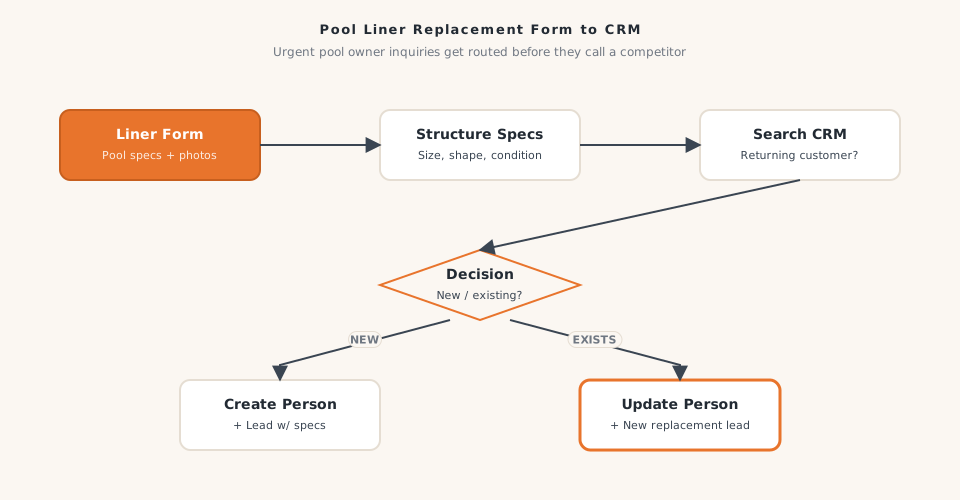
We built a workflow that activates the moment a liner replacement form is submitted. Pool specifications — shape, dimensions, liner condition, and preferred timeline — are captured automatically and mapped into structured fields. The workflow searches Pipedrive for an existing contact first. Past customers or anyone already in the database have the new liner lead attached to their record. New contacts get both a contact and a lead created in one pass. Source channel tracking is applied automatically, and the salesperson sees a complete, well-organized Pipedrive lead within about 30 seconds.
How It Works
- A pool owner fills out the liner replacement form on the website
- The workflow activates immediately on submission
- Contact information and pool details — shape, size, condition, timeline — are extracted and structured
- Pipedrive is searched for an existing contact by email or phone
- If the contact is new, a contact and lead are both created with all collected details
- If the contact already exists, a new lead is created and linked to their record
- Marketing source channel is logged to the lead automatically
The Results
- Lead creation time dropped from 15 to 20 minutes of manual processing to under 30 seconds per submission
- The team saved an estimated 8 to 10 hours per week on liner inquiry routing during peak season
- Average time from form submission to first sales contact dropped from over 30 hours to under 2 hours
- Pool specifications — shape, dimensions, condition — are now captured on every lead record, reducing back-and-forth during the quoting conversation
- An estimated 3 to 4 additional liner jobs per season are now quoted and closed that previously fell through due to delayed follow-up
Liner replacement is competitive. The companies that call back first — with the customer's pool details already in hand — win a disproportionate share of the work.
Why It Matters for Your Business
If your liner or service request forms are going to an inbox before they reach your CRM, every hour of delay is time your competitor has to return the call first. Automating the path from form to lead means your sales team is always working from complete information — fast. Impression Insights builds automations like this for pool service and renovation businesses. Let’s talk.
Ready to build yours?
Impression Insights builds practical automations for small to mid-sized businesses. Let's scope your first workflow.
Book a Discovery Call